Cravath, Swaine & Moore has announced a new associate salary scale alongside its 2026 year-end and special bonuses, establishing an important compensation benchmark for the US legal market.
The announcement, made on 17 November 2026, confirms that associate base salaries will range from $235,000 to $440,000 from 1 January 2027. The firm has also increased its special bonuses, with the most senior associates eligible to receive up to $155,000 in combined year-end and special bonus payments.
The move follows several months of speculation over whether Cravath would match the salary increases introduced by Milbank earlier this year. With one of the industry's most influential firms now confirming its position, attention turns to how other leading US law firms will respond.
Cravath's New 2027 Associate Salary Scale
Cravath's revised salary structure matches the scale introduced by Milbank in June 2026, which took effect on 1 July.
However, Cravath's increases will not become effective until 1 January 2027, creating a six-month difference between the implementation dates.
The new annual base salaries are as follows:
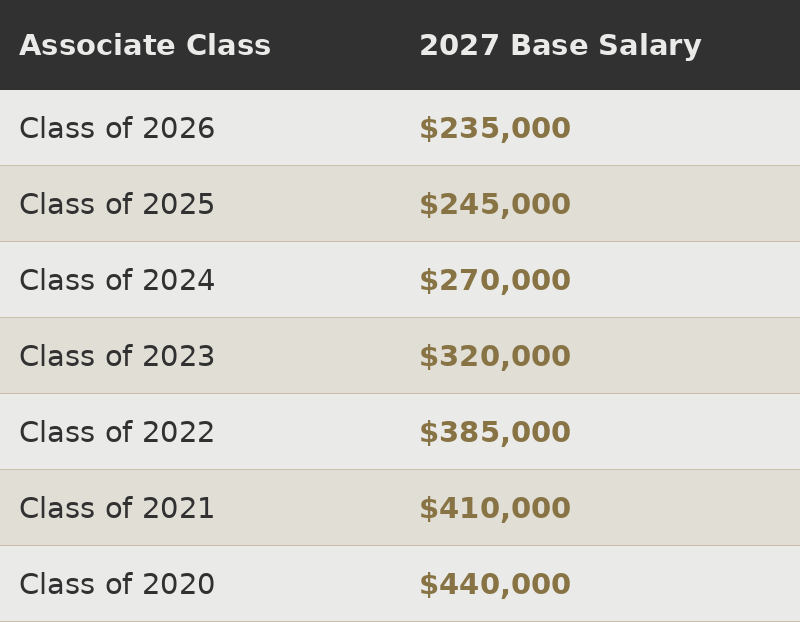
The new scale represents a $10,000 increase at the junior end compared with Cravath's previous published starting salary of $225,000, while the upper end of the published scale rises to $440,000.
Although the salary figures match Milbank's revised structure, the timing of Cravath's announcement is notable. Rather than introducing increases during the summer, the firm has aligned its salary announcement with the traditional year-end bonus season.
Cravath Announces Special Bonuses of Up to $40,000
Alongside the salary increases, Cravath has announced its 2026 year-end bonuses and an enhanced special bonus structure.
The firm's standard year-end bonuses remain unchanged from 2025, ranging from $15,000 for the most junior associates, subject to proration, to $115,000 for the class of 2019.
However, its special bonuses have increased beyond the amounts previously announced by Milbank.
Milbank's special bonuses ranged from $6,000 to $25,000. Cravath's new special bonus scale ranges from $11,000 to $40,000, depending on seniority.
The full breakdown is as follows:
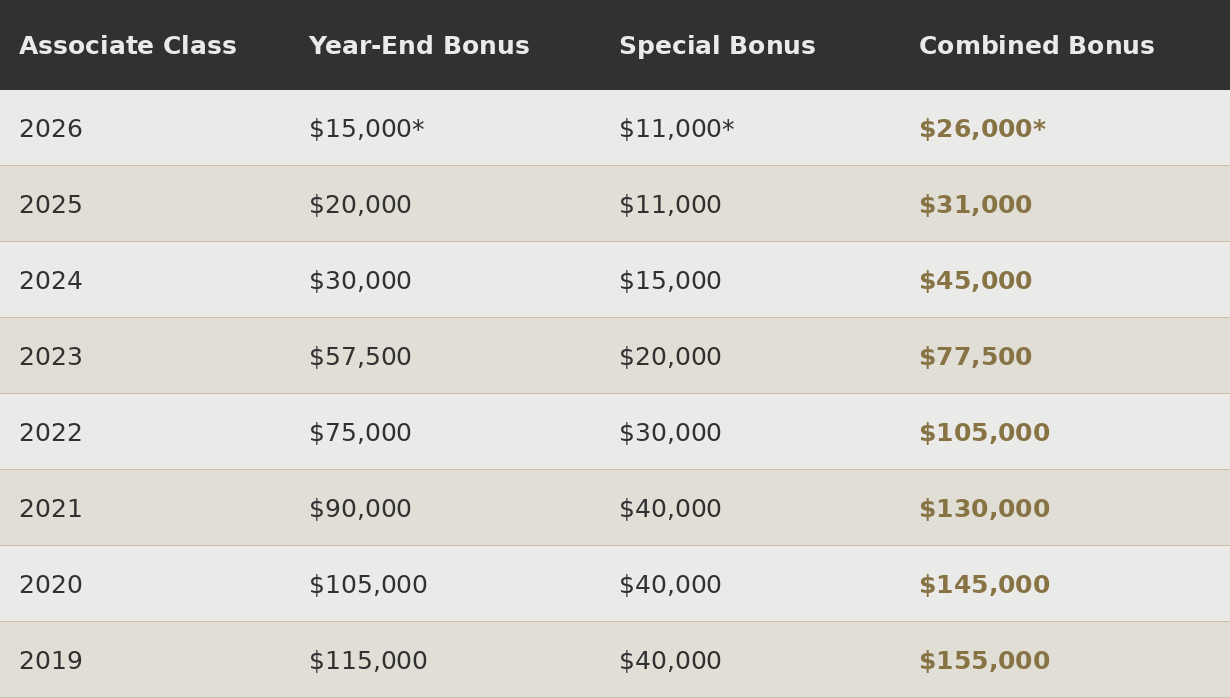
For the most senior associates, the combined bonus opportunity has increased from $140,000 in 2025 to $155,000 in 2026.
This represents a $15,000 increase in total bonus compensation, despite the standard year-end bonus remaining unchanged.
Are Cravath's Bonuses Linked to Billable Hours?
Cravath has confirmed that it does not impose a minimum billable-hours requirement for bonus eligibility.
Individual payments remain subject to satisfactory performance and other applicable conditions, although the firm has indicated that virtually all associates will receive their full class-based bonuses.
According to the announcement, bonuses will be paid on:
- 11 December 2026 for associates in New York and Washington, DC.
- 18 December 2026 for associates in London.
Associates will generally need to remain employed by the firm on the relevant payment date to qualify.
How Does Cravath's New Scale Compare With Milbank?
Milbank was the first major US firm to introduce the revised associate salary scale in June 2026, with increases taking effect the following month.
Cravath's announcement matches those base salary figures but introduces a more generous special bonus structure.
The key differences are:
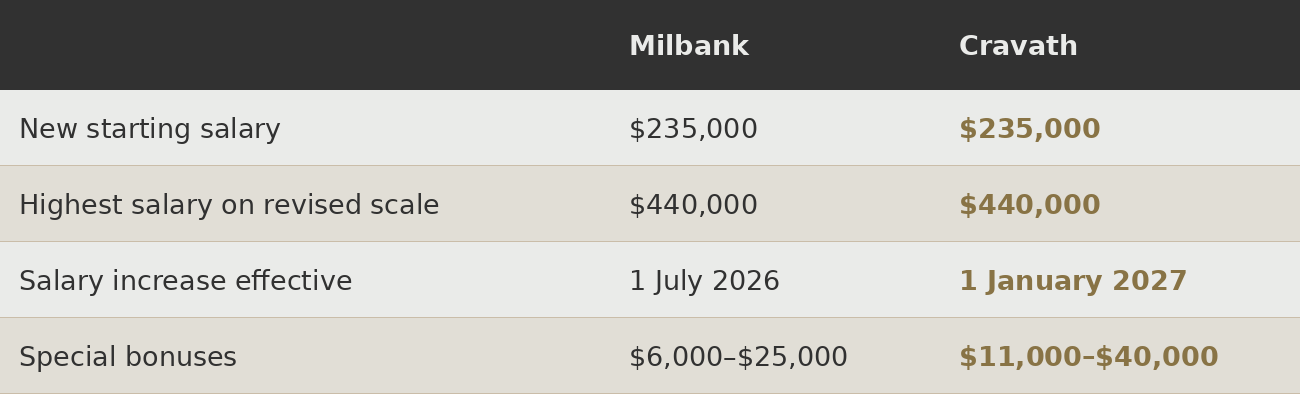
The distinction is particularly important for associates assessing total compensation rather than base salary alone.
While the two firms now share the same published annual salary scale, their different implementation dates and special bonus arrangements mean that actual earnings across the transition period will not necessarily be identical.
Cravath's decision to exceed Milbank's special bonuses also raises a new question for the wider market: will competing firms match the salary scale, the enhanced bonuses, or both?
What Does the Announcement Mean for the Wider Legal Market?
Cravath has historically played an influential role in setting associate compensation expectations across BigLaw.
Although Milbank has increasingly taken the lead in announcing salary increases, Cravath's decisions continue to attract considerable attention from firms assessing their own compensation structures.
The latest announcement establishes two important reference points for competitors: a revised base salary scale for 2027 and a higher special bonus scale for 2026.
Other firms may now face decisions about whether to adopt one or both elements.
For associates, the announcement also highlights the importance of looking beyond headline salary figures.
Two firms offering identical base salaries may provide materially different overall compensation depending on bonus eligibility, performance criteria, payment timing and additional incentives.
These differences can be particularly relevant when comparing lateral opportunities, especially where competing firms offer similar work and career development prospects.
How Could the New Scale Affect Associate Retention and Lateral Recruitment?
Compensation remains an important factor in attracting and retaining legal talent, particularly among firms competing for associates with highly sought-after experience.
When leading firms introduce salary increases or additional bonuses, the effects can extend beyond the firms making the announcements.
Associates may reassess how their existing packages compare with the wider market, while competing firms may face greater pressure to review their compensation arrangements.
For firms seeking to retain experienced associates, maintaining competitive remuneration can become especially important when lawyers have attractive opportunities elsewhere.
Equally, firms recruiting laterally may need to consider whether their compensation packages remain sufficiently competitive to attract candidates from firms that have adopted the latest scale.
However, the impact is unlikely to be uniform.
Firms differ in their profitability, compensation philosophies, practice-area demand and approaches to rewarding performance. Some may choose to match the revised salary scale, while others may emphasise discretionary bonuses, accelerated progression or other elements of their employment offering.
Compensation is also only one consideration in a lateral move.
Associates evaluating opportunities should assess the quality of work, level of responsibility, team structure, professional development and long-term career prospects alongside salary and bonuses.
The strongest career decision is not necessarily the one offering the highest immediate remuneration, but the opportunity that provides the best overall combination of compensation, experience and progression.
Will Other US Law Firms Match Cravath?
Cravath's announcement is likely to become a major reference point for the remainder of the 2026 bonus season.
The firm's decision to match Milbank's salaries while exceeding its special bonuses creates an additional consideration for competitors. It remains to be seen, however, how widely the revised compensation arrangements will be adopted.
Some firms may follow the full structure, while others may make different decisions about salaries, year-end bonuses and special payments.
The timing of any matching announcements will also matter. Firms that introduce increases earlier or provide additional bonus payments may offer different total compensation over the same period, even where their published annual salary scales are identical.
For associates, the coming weeks could provide greater clarity about how compensation will compare across the leading US firms in 2027.
For employers, the evolving market presents an important question about how best to remain competitive while maintaining a sustainable approach to associate compensation.
What Should Associates Consider Following Cravath's Announcement?
Cravath's latest compensation announcement provides an important benchmark for associates evaluating their remuneration and future career opportunities.
However, comparing compensation packages requires more than looking at published base salary figures.
Associates should consider several factors:
- Base salary: How does the firm's salary scale compare with the latest market benchmarks?
- Bonus eligibility: Are bonuses linked to billable hours, performance assessments or other requirements?
- Special bonuses: Are additional payments guaranteed, discretionary or subject to specific conditions?
- Payment timing: Could the timing of a lateral move affect bonus eligibility?
- Career progression: How do the firm's promotion opportunities and long-term prospects compare with competing employers?
As more firms respond to Cravath's announcement, associates may gain a clearer understanding of where their current compensation sits within the wider market.
For those considering a lateral move, this information can help inform discussions about remuneration and provide a useful starting point for evaluating potential opportunities.
Ultimately, compensation should be considered alongside the professional and personal factors that shape a successful long-term legal career.